
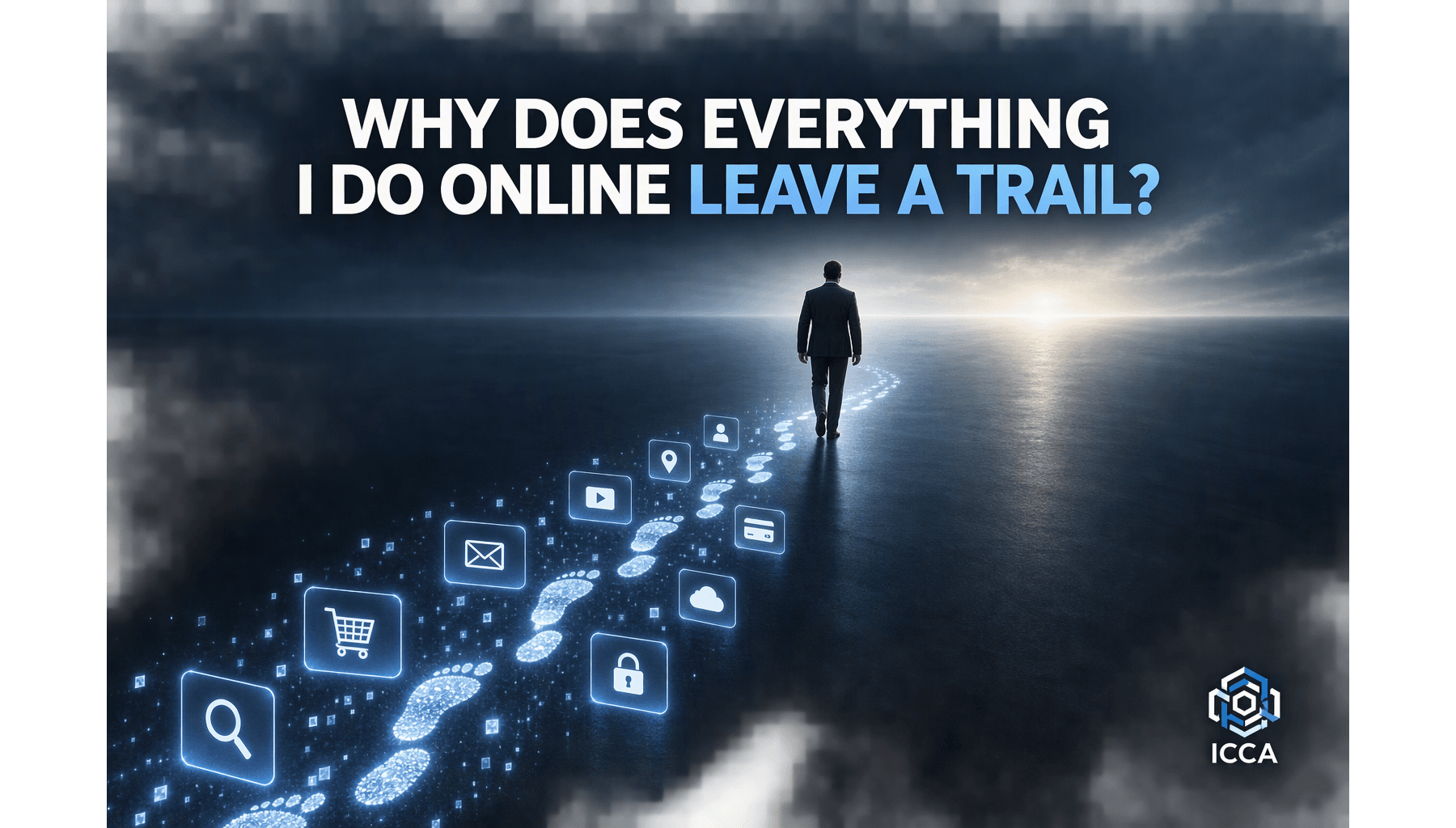
Every time we interact online, a record is created.
- A login.
- A purchase.
- A search.
- A message.
- A click.
Most of us accept this as a normal part of digital life.
But why?
Why should every interaction generate a permanent trail?
Why should organisations be expected to collect it?
And why should customers accept the risks that come with its storage?
For years, we’ve approached privacy as a question of managing information after it has been collected.
Maybe the more interesting question is whether that information needs to exist at all.
Imagine walking into a shop, buying a product and leaving.
- The interaction is complete.
- The transaction is complete.
- The relationship is complete.
- No behavioural profile is created.
- No activity history is retained.
- No permanent record follows you indefinitely.
In the physical world this is normal.
In the digital world it has become increasingly unusual.
My latest ICCA adoption article explores what happens when digital interactions are designed around the idea that observation is optional, not inevitable.
Not as a technology discussion.
- As a trust discussion.
- As a risk discussion.
As a leadership discussion.
The article draws on ICCA Zero?Metadata Transport and Trust Boundaries, which examines digital interactions where continuity, behavioural traces and metadata are designed not to accumulate.
The paper is available under the Creative Commons Attribution-ShareAlike 4.0 licence to encourage discussion, challenge, adaptation and further development.
Question for leaders:
Do customers really benefit from every interaction becoming a permanent record?
#ICCA #DigitalTrust #Leadership #Privacy #Innovation #CyberSecurity #DigitalTransformation #DataGovernance #FutureOfTechnology #CreativeCommons
